




Spotlight on Baraka May, Champion
"Never underestimate the power of music as a lifelong skill and asset to your personhood... it is one of the most precious gifts a person can pass on to another."
Spotlight on Baraka May, Vocalist and Director (Disney Television, American Idol, Frozen, Star Wars, Jurassic World, Encanto, Nightmare Before Christmas Live with Danny Elfman, Billie Eilish, Harry Styles, Call of Duty, League of Legends, Final Fantasy)
Please share a little about yourself and your relationship with ETM-LA.
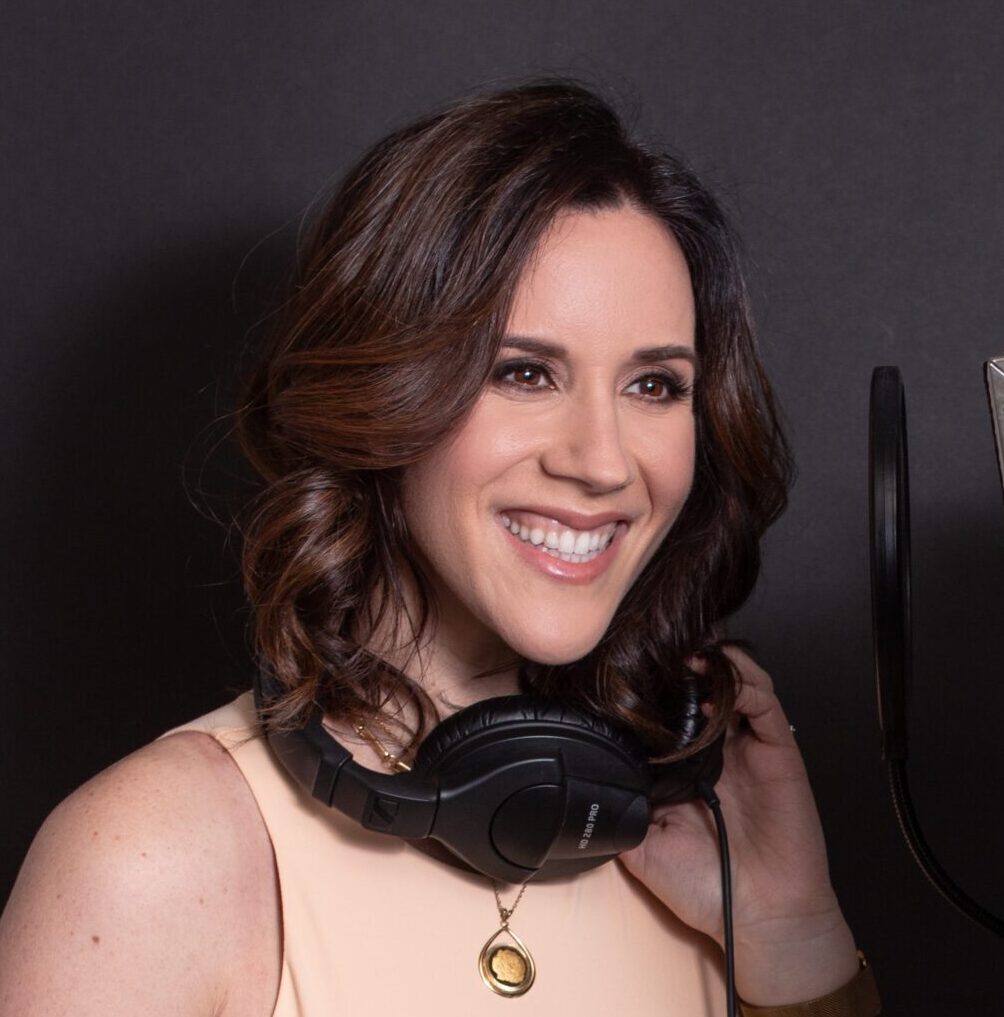
Hi, I’m Baraka (rhymes with Erica). I have been involved with ETM-LA for several years and am honored to be back again working as a guest clinician for the Music Unites the World Festival. I was born and raised here in Southern California in a large, musical family. I love being a wife and mom to my sweet husband, our wonderful 8-year old daughter, and our dog and hamster.
My musical background is in singing, directing, voiceover, arranging, private coaching, vocal contracting, and conducting choirs. My main work is session singing, where I cover all styles of music in the recording studio as a soloist, group singer, sight-singer, and improviser. I absolutely love the fun of exploring musical styles, languages, harmonies, and vocal colors. I’ve been so grateful to sing on more than 600 films, TV episodes, video games, and albums for projects that have run the creative gamut and stretched me as a musician and artist.
I’ve had the joy of working as a choral director for 20 years with choirs of all ages and levels throughout LA. I love working with singers of all backgrounds to help develop storytelling, expression, beauty, and connection with one another through music. I believe challenges are fun and help us grow, and every piece of music is a puzzle to solve collaboratively while raising our personal bars.
How has music shaped your life, and how did you begin your journey as a vocalist and voiceover artist?
Music has been a constant in my life since early childhood. It has brought me together with people in my family, at school, at church, and beyond. It’s connected me to people all over the world. Singing choral music introduced me to languages and cultures I wouldn’t have experienced otherwise.
The act of singing, itself, is such a vulnerable form of expression because your body is the instrument. Singing has taught me to be brave, be open, be adaptive, be okay with making mistakes and taking risks, and to trust my fellow singers and directors. It has taught me to stick with problems, try creative solutions, experiment, and work as a team.
I began my journey as a vocalist from early childhood, starting piano at 5 and singing at church and in musical productions throughout my school years. I led worship services at my church throughout middle school and high school, sang in talent shows, and eventually became a regular national anthem singer for many events through my childhood, with one highlight singing for the Angels Major League Baseball team at 15.
My passion for choral singing began in middle school. I became a student director and section leader in my middle school and high school choir programs and began singing in more competition settings as a soloist and ensemble singer. I also accompanied choirs on the piano and learned to conduct my peers. I eventually decided to major in music in college.
While at USC, I was a classical voice major with a musical theater minor, and I was an active member of a competitive a cappella group on campus called Reverse Osmosis. It was in this group that I sharpened many new skills, including vocal arranging, notation, beatboxing, and becoming a utility singer. Being an arranger also massively sharpened my sight-singing skills.
After graduating, I stayed at USC for my Master’s Degree in Teaching Music and my California Teaching Credential, and I began teaching choirs full-time with LAUSD. In addition to teaching choirs and private students, I sang professionally with several groups, recorded sessions, sang live gigs, and led worship services at my church.
Eventually, I was hired for my first film session in 2011 and fell in love with session singing. I began to sing more sessions and take on more private students, which led to me leaving LAUSD and working as a private instructor at AMDA and with the a cappella groups at John Burroughs HS. As my session singing career blossomed, I shifted to more private teaching and conducting choirs part time.
In 2014, I joined the LA Choral Lab, a professional choir that I sing in and have now conducted and directed for the past 5 years. In 2019, I started the Los Angeles Youth Studio with my partner, Laura Jackman, where we teach workshops to children to prepare them for the session singing world. In 2021, I was signed with my voiceover agency, and I began regularly working as a voice actor as well. That same year, Disney Television brought me on as a regular director for their voice actors on various songs for their shows, and I’ve been working with them ever since as a singer, vocal contractor, arranger, and director.
Tell us about your passion for working with and coaching other singers.
I have always loved teaching and inspiring others. I am the third out of eight children, and I grew up teaching and taking care of my younger siblings. I am passionate about psychology and mental fortitude, and I love seeing the impact of music on a singer’s psychology.
So much of my work with singers is actually more mental than physical. It’s helping singers move past their own walls, shift their awareness, think like an athlete training their bodies, be kind to themselves, focus on process over product, work as a team, and more. In another life, I likely would’ve been a psychologist or a personal trainer or life coach, but I like to think I bring all of that into my practice when working with singers.
Singing is a whole-body experience. The body is the instrument, which can be incredibly vulnerable and hard to pinpoint at times. I train singers like athletes. The way we eat, sleep, talk, exercise, the amount of hydration we get, the stress we carry, the way we talk to ourselves, our daily habits, the way we respond to setbacks, the pressure we feel… it all affects our singing. Like athletes, musicians must learn to weather the off days, recover from errors, and drill the basics again and again to create muscle memory.
The beautiful thing about coaching singers is the magic that happens within. I have seen singers grow in their self-talk through music study. I’ve seen singers break through the walls of fear, perfectionism, anxiety, and embarrassment through this collective and courageous work.
Why is music education so important for every child?
It is well-documented that music is one of the most effective and holistic ways to integrate and practice many of life’s necessary skills. It activates both sides of the brain like nothing else. It challenges the musician to plan ahead and improvise simultaneously, to think logically and creatively at the same time, to use math and technique at the same time as poetry and expression, to be both athletic and artistic. Brain studies have shown more synapses going off in the brain of a singer than nearly any other profession.
The long-term benefits of the body and breath work of a singer cannot be understated. The long exhales required for singers are linked to parasympathetic nervous system activation, which signals safety and calm in our bodies. It teaches us to tap into the power of our breath and to elongate and slow down our breathing, which is linked to many health markers, both physical and mental.
The social benefits of music are outstanding. Music puts us in the room together. People of all different backgrounds, personalities, and situations are joined to become one. People with very different voices have to learn to tune, blend, and balance to one another in sync with the tempo. The art of being a soloist vs an ensemble player challenges a musician to listen, adapt, and connect with the other players while still being expressive and emotive. The songs we sing tell stories and cultivate empathy and curiosity. We learn history and culture through music. We learn to feel one another through making music together.
The fine motor skills involved with music-making are fantastic for a child’s development. Even more so, the act of repetition on scales and arpeggios and rehearsing songs in small chunks, one step at a time, has a massive impact on a child’s development of frustration tolerance and building resilience. In a world that often feeds instant gratification, music education teaches delayed gratification and the slow building of skills. Skills like learning to stay with a problem, drilling the hard parts again and again until they flow, enjoying the simple and even boring elements of practice, and socially connecting and adapting to one’s fellow musicians… These skills translate outside of the music room into all parts of life.
Why is it important for students to learn about all of the various pathways that music can take them down?
I grew up thinking the only pathways were being a star or being a teacher! I wish I had known there were so many more ways to use music in your life back then. I think it’s essential that students know that music is a lifelong asset for their leisure, for social connection, for family gatherings, for self-expression, and yes, for many, many career paths. Just simply knowing an instrument or feeling comfortable singing with others can keep you connected in any place, in any town you move to. There are local choirs and church bands and community theater programs. Music is the universal language. Learning a musical skill is your ticket to community anywhere. For life.
If it turns into a career path, learning music as a child can lead you to being a music creator in so many ways. The people behind the scenes, who aren’t the stars, are all musicians. The producers, mixers, editors, directors, songwriters, coaches, composers, lyricists, music supervisors, casting directors, even agents and managers and more, all have musical backgrounds. It is an asset to their teams when they can come in and speak the same language as the talent they are working with.
Never underestimate the power of music as a lifelong skill and asset to your personhood. Whether it becomes your source of income, a source of joy and connection with others, or a source of personal expression, it is one of the most precious gifts a person can pass on to another.