
The Power of Music Education
Access to in-school music class has been shown to improve social-emotional wellness, motivation for school, connection to peers, and self-confidence.
The Benefits of Music Education
Music Strengthens the Brain
The process of learning and playing an instrument increases brain power and functionality, resulting in a boosted IQ and improved concentration. Music accelerates brain development for babies and children, enhancing fine and gross motor skills, executive function, and sensory development.
Music Improves Success in School & Life
Children who study music perform better in school. Positive attributes learned through music–making, such as confidence, independence, perseverance, leadership, and personal responsibility, prepare you for life-long success.
Music Nurtures the Mind
Music education supports students’ social and emotional well-being. Studying music nurtures creativity, builds empathy, and helps kids better express their emotions and manage anxiety.
Music Builds Community & Advances Equity
Music brings us together. When making music with others, such as in a group class, chamber group, or ensemble, students are introduced to new experiences and points of view. Music connects different cultures and advances equity and belonging.
ETM-LA's Impact
% of Students Who Liked School More
Schools with ETM-LA
76%
Schools without ETM-LA
42%
% of Students Who Liked Themselves More
Schools with ETM-LA
89%
Schools without ETM-LA
56%
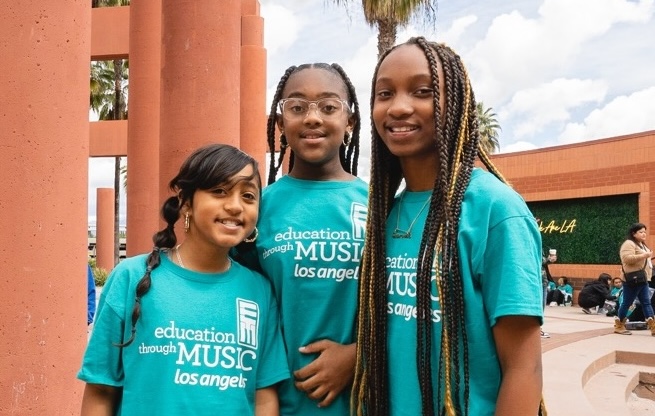
"Both my son and daughter get more excited about going to school on the days that they have their music class." - Miriam, Parent
"Music has changed so much of my life, it's made me build confidence."
- Gio, Student
Classroom Teachers Report Students Had Higher Levels of...
Self-Confidence
91%
Peer Collaboration
86%
Academics
89%
Social Emotional Intellegence
90%